


Views: 0 Author: Site Editor Publish Time: 2026-08-03 Origin: Site


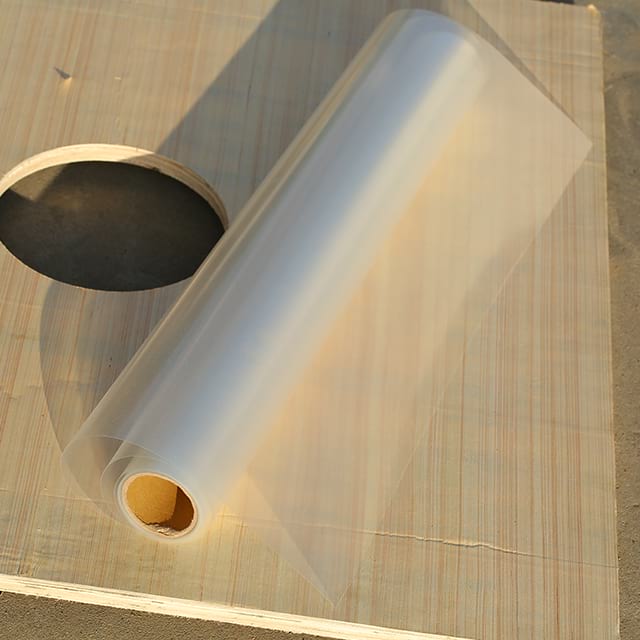
PET film (Polyester Film) is widely used in medical imaging, digital printing, advertising displays, engineering drawings, and industrial applications because of its excellent transparency, strength, dimensional stability, and durability.
Typical PET-based printing products include:
Inkjet Medical X-ray Film
Inkjet Transparency Film
CAD Plotter Film
Backlit Film
Industrial Printing PET Film
All of these products rely on PET as an important base material.
However, during production, processing, and printing, many users encounter a common problem:
Why does PET film generate static electricity?
Static electricity may seem like a minor issue, but it can affect processing efficiency and final printing performance, causing problems such as:
Dust attraction on the film surface
Film sticking during handling
Unstable printer feeding
Reduced image quality in high-precision applications
Understanding the causes of static electricity in PET film is important when selecting reliable printing materials.
PET is a high-performance polyester material with excellent insulating properties.
This characteristic provides many advantages, including:
Excellent mechanical strength
High dimensional stability
Good transparency
Strong heat and chemical resistance
However, because PET does not easily release electrical charges, static electricity can accumulate on the film surface when friction occurs during processing or handling.
During PET film production and converting, the material usually passes through multiple processes, including:
Unwinding
Coating
Drying
Slitting
Rewinding
Packaging
During these processes, PET film continuously contacts different surfaces such as:
Guide rollers
Pressure rollers
Slitting equipment
Packaging materials
When different materials contact and separate, electrons can transfer between surfaces, creating static charges.
The faster the film moves, the greater the friction, and the higher the possibility of static buildup.
For ordinary packaging films, a small amount of static may have limited impact.
However, for high-precision printing materials such as medical film, transparency film, and CAD plotter film, static control becomes much more important.
Many users notice that:
"PET film attracts more dust in winter or dry environments."
The main reason is low humidity.
Moisture in the air helps electrical charges dissipate. When humidity decreases, static charges remain on the PET surface for a longer time.
Therefore, maintaining suitable environmental humidity during PET film production and printing helps reduce static-related problems.
PET naturally has excellent insulation properties.
This is one of the reasons why PET film is widely used in professional printing applications because it provides:
Stable physical performance
Long-term durability
Excellent dimensional stability
However, the same insulating characteristics also make it more difficult for surface charges to disappear quickly.
During high-speed slitting, continuous printing, or automated processing, static control becomes an important factor for stable performance.
Professional PET printing films usually require functional coating technology.
The coating layer plays an important role in both printing quality and surface performance.
For example:

Medical inkjet film requires a specialized coating layer to achieve:
Fast ink absorption
High-resolution medical images
Stable grayscale reproduction
High black density performance
Transparency film requires coating technology to provide:
Strong ink adhesion
Sharp image details
Excellent black density
It is commonly used for:
Screen printing plate making
Industrial film output
Graphic reproduction

CAD plotter film requires precise surface control to achieve:
Accurate line reproduction
Controlled ink spreading
Stable dimensions
It is widely used for:
Architectural drawings
Engineering designs
Mechanical drawings
Therefore, professional PET printing materials depend not only on PET substrate quality but also on advanced surface coating technology.
Inkjet Medical X-ray Film is a high-precision imaging material that requires excellent image quality and stability.
Hospitals and imaging centers usually require:
Clear medical images
Accurate grayscale performance
High black density
Long-term image storage
If static electricity is not properly controlled during production or use, several problems may occur.
Static charges can attract small particles from the environment, contaminating the film surface and affecting printing quality.
Static electricity may cause multiple sheets of medical film to stick together, affecting smooth feeding through printers.
Medical images require detailed information. Any surface contamination or printing irregularity may reduce the quality of the final image.
Static electricity can also influence other PET-based printing materials.
For screen printing and industrial film output applications, transparency film requires:
High black density
Sharp edges
Stable dimensions
If static attracts dust particles, it may reduce the quality of the final output.
Engineering drawings often contain fine lines, measurements, and technical details.
Static electricity may cause:
Film sticking
Feeding problems
Printing alignment issues
For architecture, engineering, and manufacturing industries, stable PET plotter film helps improve printing reliability.
Maintaining stable environmental humidity helps electrical charges dissipate more easily.
For precision coating and printing materials, environmental control is an important factor in product consistency.
Anti-static coatings or surface treatments can improve the ability of PET film to release electrical charges.
This technology is commonly used for:
Medical imaging materials
Industrial printing films
High-precision functional films
Optimizing equipment operation can reduce unnecessary friction.
Methods include:
Adjusting roller pressure
Improving film path design
Selecting suitable processing materials
These improvements help reduce static generation.
For printing-grade PET film, the coating layer determines not only:
Ink absorption speed
Image sharpness
Black density
but also affects:
Surface friction performance
Static release ability
Processing stability
Static electricity in PET film is caused by a combination of material characteristics, friction during processing, environmental humidity, and surface treatment technology.
For ordinary applications, static electricity may only be a small inconvenience.
However, for high-precision PET printing materials such as Inkjet Medical X-ray Film, Inkjet Transparency Film, and CAD Plotter Film, static control directly affects printing quality, production efficiency, and user experience.
When selecting PET printing materials, customers should consider not only the PET substrate quality but also coating technology, manufacturing process, and overall product stability.
High-quality PET substrates combined with professional coating technology help reduce static-related issues and provide more reliable printing performance.


