


Views: 0 Author: Site Editor Publish Time: 2026-10-14 Origin: Site


Imagine pulling a batch of pristine custom logos from a storage bin. You slide one under the press. The moment the heat hits, the edges curl violently. Worse yet, the design looks perfect upon application but peels away after a single wash. Have you ever ruined a flawless design during the heat press stage? This frustrating failure is rarely a machine error. On the production floor, we see this constantly. Poor storage is usually the hidden culprit behind these catastrophic defects.
Direct-to-Film materials require a delicate chemical balance to function correctly. As a foundational element of Direct-to-Film Transfer Printing, bad environmental conditions destroy your supplies rapidly. Profitable inventory quickly turns into expensive waste. Proper preservation is not just a casual recommendation. It is a mandatory operational step. Strict storage protocols ensure vibrant colors, sharp edges, and long-lasting washability for your garments.
In this comprehensive guide, we will explore the exact environmental rules, mechanical handling techniques, and expert strategies needed to maximize the shelf life of your printing supplies. We will look at this from a technical engineering perspective to help you eliminate preventable waste.
Temperature and Humidity: The fundamental rule is maintaining your storage facility at 50 to 70 degrees Fahrenheit with a strictly controlled relative humidity of 40 to 60 percent.
Moisture is the Enemy: Excessive ambient moisture causes polyurethane adhesive powder to clump and the substrate to warp. This directly results in severe structural print defects.
Physical Storage: Transfers must be stored completely flat in airtight, climate-sealed containers. These should be equipped with silica gel desiccants to prevent mechanical scratching and moisture ingress.
Shelf Life: When stored under optimal conditions, cured transfers maintain viability for up to 12 months. However, environmental volatility significantly accelerates degradation.
Handling Matters: Human sebum, skin oils, and static electricity disrupt unpressed transfers. Operators should handle materials strictly by the margins or utilize anti-static gloves.
Understanding the physical degradation of printing materials requires looking closely at their structural composition. The process is not merely mechanical. It relies heavily on precise chemical interactions that are highly susceptible to environmental interference. As printing technicians, we must respect the chemistry.
A standard transfer consists of three primary layers. The base layer is the DTF PET Film, which features a specialized release coating designed to hold wet ink while allowing for a clean peel after pressing. Resting on top of this is the wet pigment ink. This ink layer includes a heavy titanium dioxide-based white underbase. The final layer is the hot-melt polyurethane adhesive powder. This powder is applied to the wet ink and melted to form a durable bonding agent.
These three components are chemically reactive and highly sensitive to their surroundings. For instance, the polyurethane adhesive powder is inherently hygroscopic. This means it actively absorbs water molecules from the surrounding air. When exposed to fluctuating temperatures, the thermal expansion and contraction of the PET base differ from the ink layer. This mismatch causes microscopic mechanical stress across the design.
Furthermore, heat accelerates the curing process prematurely. It causes the adhesive to cross-link before it ever touches a garment. Extreme cold, in contrast, renders the adhesive brittle and leads to micro-fractures in the ink layer. Proper storage mitigates these invisible chemical reactions. It ensures the materials remain in a stable, dormant state until activated by the controlled heat and pressure of your commercial press.
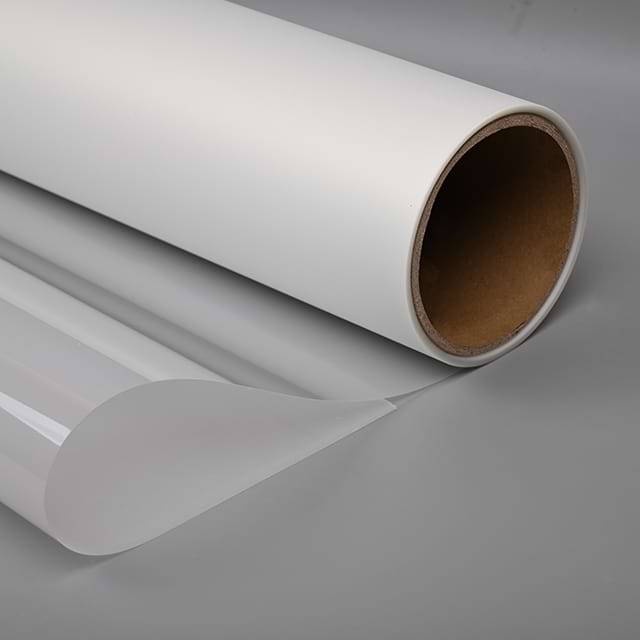
Achieving consistent results in your print shop requires treating your storage area with the same operational rigor as a laboratory. Environmental parameters are the absolute most critical variables in material preservation.
Industry standards dictate that a climate-controlled room maintained between 50 and 70 degrees Fahrenheit is essential for preserving chemical stability.
Temperatures exceeding 75 degrees Fahrenheit introduce the immediate risk of premature adhesive activation. The hot-melt powder begins to soften. This causes stacked transfers to fuse together, creating a frustrating phenomenon known as blocking. On the other end of the spectrum, temperatures dropping below 45 degrees cause the plasticizers within the ink and the PET base to harden. When cold transfers are suddenly introduced to a 300-degree heat press, the rapid thermal shock often results in immediate ink cracking or an incomplete adhesive release.
Relative humidity represents the most significant threat to transfer integrity. The optimal range is strictly between 40 and 60 percent.
High Humidity above 60 percent: When the air is saturated, the hygroscopic adhesive powder absorbs ambient moisture. This causes the powder to clump, preventing an even melt during the curing phase. The result is a gummy or textured feel on the final garment. Specifically, the moisture disrupts the release coating on the film. The edges curl inward violently, which frequently leads to catastrophic printer head strikes.
Low Humidity below 40 percent: Excessively dry environments generate severe static electricity. Static charges cause the finely milled adhesive powder to migrate. It clings to areas of the film where no ink is present. If not carefully brushed off, this stray powder melts onto the garment during pressing. This leaves a permanent, undesirable white halo around your design.
Environmental Factor | Optimal Range | Risk of Exceeding Range | Risk of Falling Below Range |
|---|---|---|---|
Temperature | 50 to 70 degrees Fahrenheit | Adhesive melting, film blocking, ink bleeding | Ink cracking, severe thermal shock during press |
Relative Humidity | 40 to 60 percent | Powder clumping, severe film curling, gummy texture | High static electricity, powder migration, white halos |
Beyond atmospheric conditions, the mechanical handling and physical placement of your materials dictate their long-term viability. Improper physical storage introduces structural deformities that cannot be reversed. This remains true no matter how perfect your room temperature is.
The golden rule of physical storage is maintaining a perfectly flat orientation. While raw unprinted film is often shipped in tight rolls, printed and cured sheets must never be stored rolled.
Leaving cured transfers in a rolled state induces memory curl in the PET substrate. Because the cured ink and adhesive layer have a different flexibility than the raw plastic, rolling creates differential tension. When operators attempt to press a curled transfer, the uneven surface prevents the heat platen from applying uniform pressure. This lack of uniform pressure results in cold spots where the adhesive fails to bind with the fabric fibers. Ultimately, this leads to premature peeling after the first wash cycle.
To isolate transfers from micro-climate fluctuations, operators should implement practical and airtight storage setups.
Airtight Enclosures: Utilize heavy-duty plastic bins with silicone gaskets or industrial resealable poly bags. This creates an isolated micro-environment completely independent of fluctuating room conditions.
Desiccant Integration: The mandatory use of silica gel packets within these containers absorbs trapped ambient moisture. For commercial operations, indicating silica gel provides a visual cue for replacement because it changes color when saturated.
Separation Layers: When stacking multiple cured prints, place a sheet of non-reactive parchment paper or a Teflon sheet between each transfer. This prevents the microscopic surface tension of the adhesive from binding to the back of the adjacent film.
Human interaction introduces biological contaminants. Human sebum and perspiration act as resist agents against water-based inks and adhesives. Fingerprints left on the printable side of the film will repel ink, creating visible bare spots in the final design. Operators must handle the materials strictly by the extreme outer edges. Alternatively, utilize lint-free anti-static gloves during all phases of production and packaging.
A frequent concern among print shop owners involves inventory management and the exact shelf life of their materials. While this technology offers excellent longevity compared to traditional heat transfer vinyl, it is not impervious to time.
The baseline longevity depends entirely on the state of the material.
Blank Unused Film: When kept in its original factory-sealed packaging, raw film boasts a shelf life of 12 to 24 months. The protective multi-layer coating remains stable as long as it is shielded from oxygen and moisture.
Fully Printed and Cured Transfers: Once the ink is applied and the adhesive powder is melted, the chemical clock accelerates. Properly stored, a cured transfer remains highly viable for 6 to 12 months. Beyond this window, the adhesive gradually loses its elasticity and binding strength.
Several environmental variables act as catalysts for degradation. These will drastically reduce the expected shelf life.
UV Light Exposure: Prolonged exposure to ambient sunlight or harsh fluorescent lighting induces photo-oxidation. The UV rays break down the molecular bonds in the CMYK pigments. This causes vibrant colors to fade long before the transfer is ever pressed.
Oxygen Degradation: Continuous exposure to open air allows oxygen to interact with the cured polyurethane. Over time, this slowly renders the adhesive brittle and prone to cracking.
Particulate Contamination: Airborne dust and micro-debris settle onto the slightly tacky surface of the cured adhesive. During the heat press stage, these particles act as physical barriers. They prevent the adhesive from fully penetrating the garment fibers.
Analyzing failure rates across commercial print shops reveals a pattern of consistent and preventable storage errors. Avoiding these common pitfalls is essential for maintaining a profitable operation.
Many hobbyists and small businesses utilize garages or basements for inventory storage. We see this constantly in field troubleshooting. These environments are generally not climate-controlled. They are subject to severe diurnal temperature cycles. A garage that reaches 85 degrees during the day and drops to 50 degrees at night subjects the transfers to continuous thermal expansion and contraction. Basements, in contrast, act as moisture sinks. They frequently exceed the 60 percent humidity threshold, guaranteeing adhesive clumping.
Storing transfers near windows or under direct skylights is a critical error. The ultraviolet radiation from direct sunlight degrades the vibrancy of the inks. The white underbase relies on titanium dioxide for its opacity. It is particularly sensitive to photo-degradation. Prolonged UV exposure will cause the stark white ink to take on a yellowish translucent hue. This completely compromises the color accuracy of the design above it.
While storing transfers flat is required, subjecting them to excessive vertical weight is highly detrimental. Stacking heavy boxes, equipment, or hundreds of transfers on top of one another compresses the adhesive powder. Over time, this pressure forces the polyurethane to cold-flow. It aggressively adheres to the non-coated back of the film directly above it. When the operator attempts to separate the sheets, the adhesive tears away from the design. This renders the transfer entirely useless.
Despite best efforts, operators must be able to diagnose compromised materials before committing them to a final garment. Pressing a degraded transfer wastes both the film and the expensive apparel.
Careful visual inspection often reveals storage failures. Operators should look for specific warning signs.
Severe Edge Curling: If the film rolls inward tightly upon itself, the release coating has absorbed excessive moisture.
Powder Flaking: If gently tapping the film causes large amounts of the white adhesive powder to flake off like snow, the transfer was likely stored in an environment that was too cold or too dry. The adhesive has lost its bond with the ink.
Discoloration: A white underbase that appears mottled, translucent, or yellowed indicates moisture contamination or UV degradation.
If visual cues are missed, poor storage will inevitably manifest during the application process.
Refusal to Release: If the PET base refuses to peel away cleanly, tearing the ink or leaving heavy residue, the release coating was likely damaged by high humidity or heat.
Post-Wash Peeling: The most insidious failure occurs when a print looks perfect after pressing but peels off the shirt after a single laundry cycle. This indicates that the adhesive was either chemically compromised by moisture or had aged past its viable shelf life. Its structural integrity is gone.
Maintaining strict environmental controls is critical for preserving your prints. However, the baseline quality of the raw materials you choose dictates how forgiving those materials will be. A climate-controlled room cannot save a poorly manufactured product from degrading. Conversely, a high-quality substrate provides a much wider margin of error during unexpected environmental fluctuations.
Looking at recent industry trends, there is a massive surge in decentralized print-on-demand operations. Many of these shops operate out of non-traditional commercial spaces. Consequently, industry analysts note a sharp rise in climate-related print failures. As the custom apparel sector scales, successful print shops are actively abandoning budget substrates. Instead, they are pivoting to advanced moisture-barrier films to mitigate the high costs of seasonal weather fluctuations.
The fundamental difference between premium DTF transfer film and budget alternatives lies in the coating engineering. High-quality films typically feature a robust 75-micron PET base paired with a proprietary 5-layer coating process. This is designed to serve multiple functions simultaneously.
Double-Sided Anti-Static Layer: Cheap films lack adequate anti-static treatments. This causes them to attract stray polyurethane powder to non-printed areas. Premium films incorporate a dedicated double-sided anti-static layer that dissipates electrical charges. This ensures the film remains clean even after months in a dry storage bin.
Advanced Moisture-Resistant Barrier: Economy films with porous coatings act like sponges. Premium films integrate a dense moisture-resistant barrier that significantly slows down the rate of water absorption. This extends safe handling time and prevents rapid curling under humid conditions.
Premium Matte Release Layer: In sub-standard products, this chemical peel layer breaks down rapidly when exposed to oxygen and minor temperature shifts. This leads to sticky and ruined peels. High-grade coatings maintain their chemical stability over a much longer period. They ensure a smooth and predictable peel, whether you are utilizing a hot peel or cold peel application.
Mitigating storage failures begins right at the procurement stage. Investing in high-quality materials reduces the operational burden of maintaining hyper-strict environmental controls. When a print shop operates with premium substrates, the risk of catastrophic batch failures due to minor humidity spikes or temperature drops is drastically minimized.
For businesses executing commercial printing at scale, consistency is the most valuable metric. By upgrading your baseline inventory to premium coated films, you are not just buying a substrate. You are purchasing an insurance policy against environmental variables. High-grade films are engineered to withstand the rigors of commercial storage. They ensure that a transfer printed in January applies just as flawlessly when pressed in July.
Mastering your print process does not end at the curing oven. Proper storage bridges the critical gap between a good print and a perfect, retail-ready product.
Always control your room temperature and monitor humidity levels daily using a reliable digital hygrometer. Protect your investments by storing items flat in airtight containers, separated by protective sheets. You should audit your current storage setup today. Identifying weak points in your climate control can save thousands of dollars in ruined garments and wasted labor.
Finally, upgrade your materials to films that actively withstand environmental changes. For reliable, climate-resilient supplies, explore the premium options available at FilmStarlight. You will find the exact high-quality DTF PET film engineered specifically for your production environment. Consistent storage habits, paired with premium supplies, will guarantee your business success and keep your customers coming back for durable, vibrant apparel.
Yes. If your local climate naturally exceeds 60 percent relative humidity, investing in a commercial-grade dehumidifier is a crucial operational requirement. The polyurethane adhesive powder is highly hygroscopic, meaning it actively attracts and absorbs water molecules. When humidity surpasses the 60 percent threshold, the powder clumps together, altering its melting point. This creates microscopic steam bubbles during the heat press stage, resulting in a transfer that feels gummy and peels prematurely. A dehumidifier allows you to lock your room environment into the optimal 40 to 60 percent range, neutralizing the threat of moisture damage entirely.
No. Refrigerating transfers introduces extreme condensation risks and will irreparably damage the adhesive and the film coating. It is a common misconception that colder temperatures universally extend shelf life. When you store a transfer in a refrigerator at around 35 to 40 degrees Fahrenheit, and then introduce it to a standard room temperature environment, the temperature differential causes immediate condensation. Water droplets rapidly form on the surface of the cured adhesive powder, turning it into a useless paste. The optimal storage temperature is a stable, climate-controlled room between 50 and 70 degrees Fahrenheit.
Slightly curled film can sometimes be salvaged through strict moisture extraction and physical flattening. However, severe curling usually indicates permanent compromise. To attempt a recovery, move the affected film into a strictly controlled dry environment at around 40 percent humidity. Place the curled sheets on a clean hard surface, cover them with parchment paper to prevent scratching, and place heavy, evenly distributed flat objects over the entire surface area. Leave the film under this pressure for 24 to 48 hours. While this method can flatten the film enough to run it through a printer without causing a head strike, it does not reverse the chemical degradation of the coating.
Yes, you can stack them, but only if they are fully cured and properly separated by protective barrier sheets. You must never stack raw unprinted film without its original packaging. Furthermore, never stack freshly printed transfers that have not gone through the complete curing oven process. For fully cured transfers, never let the front adhesive side of one transfer touch the back of another. Always place a sheet of silicone-coated parchment paper or Teflon paper between every single transfer. Additionally, limit your stacks to no more than 50 sheets per pile to prevent the cumulative weight from compressing the adhesive powder.
A greasy or oily texture on the surface of your cured film is a classic sign of glycerin migration caused by high humidity. Water-based DTF inks contain glycerin to keep the printheads from clogging. In high-humidity storage environments, the excess moisture in the air interacts with the ink layer, causing the glycerin to separate and migrate to the surface of the adhesive powder. When you press a greasy transfer, the oil acts as a barrier against the fabric, virtually guaranteeing that the design will wash off in the laundry. Maintaining strict humidity control prevents this separation.
No, baking moisture-compromised film is highly destructive. If your raw film or cured transfers have absorbed ambient humidity, running them through a curing oven or hovering a heat press over them will not safely extract the water. Instead, the rapid application of intense heat causes the trapped moisture to boil instantly. On raw film, this destroys the chemical release coating. On printed transfers, the steam bubbles warp the ink layer and prematurely cross-link the adhesive powder before it ever touches your garment. The only safe way to extract moisture is slowly, using a dehumidified room and silica gel desiccants over several days.


