


Views: 0 Author: Site Editor Publish Time: 2026-10-07 Origin: Site


The custom apparel market is scaling rapidly. Consumer demand for personalized, high-definition garments drives this shift. Yet, many print shop owners face a recurring nightmare. You invest in expensive printheads and premium inks. You pull a freshly pressed hoodie off the platen. The colors look muddy. The edges are lifting. Why does this happen? These failures almost always stem from a single overlooked variable: the base substrate.
The carrier medium is the true unsung hero of garment decoration. Explicitly engineered coatings solve common production headaches, ensuring vibrant and durable prints every single time. By understanding the mechanics behind this essential material, you can standardize your output, reduce waste, and significantly boost your business return on investment.
Premium base films feature specialized chemical coatings to hold wet ink securely without microscopic bleeding.
The structural quality of your carrier medium directly impacts color vibrancy, wash-fastness, and fine-detail resolution.
Choosing between hot peel and cold peel variants depends entirely on your production speed requirements and desired tactile finish.
Investing in high-grade materials prevents common industry issues like adhesive powder sticking to unprinted areas or edges curling under thermal stress.
Proper storage and handling protocols are mandatory to maximize the lifespan and efficacy of your consumables.
To understand the mechanics of modern garment decoration, one must first examine the foundational materials involved. PET stands for Polyethylene Terephthalate. It is a highly durable, heat-resistant, and dimensionally stable thermoplastic polymer. In industrial applications, this specific polymer is favored for its structural integrity under extreme thermal stress. This makes it an ideal candidate for heat transfer processes.
In the context of Direct-to-Film workflows, this material acts as the temporary carrier for your digital design. However, a standard sheet of commercial plastic cannot function in this environment. What elevates a basic polymer sheet to a professional-grade consumable is the application of a proprietary chemical release coating.
This specialized treatment is engineered to perform two contradictory tasks simultaneously. First, the microporous surface must absorb and hold the wet CMYK and white inks in a precise formation. It actively prevents them from running or pooling. Second, it must grip the thermoplastic polyurethane adhesive powder until curing is complete. Finally, upon the application of heat and pressure, the chemical bonds must break. This releases the ink and adhesive entirely onto the fabric substrate. The precision of this microscopic layer is what differentiates professional-grade materials from lower-tier alternatives.
Recent market analyses of the garment decoration sector reveal a distinct pivot. As consumer demand for hyper-personalized, short-run apparel skyrockets, commercial print shops are aggressively moving away from labor-intensive screen printing. The industry is transitioning toward automated digital lines. However, the bottleneck is no longer printer speed. The new challenge is substrate reliability.
Industry reports highlight that the sustained growth of digital apparel decoration is fundamentally anchored to advancements in consumable substrates. High-volume shops require films that will not warp under high-speed curing. Specifically, the rapid evolution of dual-matte, anti-static microporous coatings on polymer sheets has unlocked unprecedented production speeds. This allows businesses to scale operations without sacrificing the wash-fastness or color fidelity that modern consumers expect.
The visual output of a printed t-shirt is heavily dictated by how the liquid pigment behaves before it ever touches the fabric. The base film serves as the control variable in this complex chemical equation.
Standard transfer papers or inferior plastics allow liquid to spread microscopically upon contact. This migration leads to blurred edges, loss of halftone details, and muddy colors. High-quality substrates feature an advanced micro-porous absorption layer. When the printhead deposits the ink, this coating instantly locks the microscopic droplets in place. Consequently, it prevents the heavy white ink underbase from mixing prematurely with the delicate CMYK color layer. By maintaining strict separation and preventing droplet spread, the material ensures sharp, high-definition images with stunningly accurate color reproduction.
The release factor is a critical metric in commercial Transfer Printing. When a design is pressed onto a garment, the ultimate goal is for 100 percent of the pigmented ink and adhesive to permanently bond with the fabric. Inferior materials often retain a thin layer of pigment after peeling. This results in a faded, distressed, or vintage look on the final product, even when that was not the intended design. Premium films utilize a highly calibrated release agent within the matte coating. When exposed to specific temperatures, the chemical bonds between the coating and the ink break down seamlessly. This leaves the carrier completely clear and ensures maximum color density on the shirt.
The curing and pressing process subjects the carrier medium to severe thermal stress. The material must pass through a specialized oven to melt the adhesive powder into a gel. Later, it endures the intense heat and pressure of a commercial heat press. Standard plastics will shrink, warp, or melt entirely under these conditions. Polyethylene Terephthalate is specifically chosen for its high melting point. An industrial-standard 75-micron thick sheet will withstand prolonged exposure to temperatures up to 350°F without warping. This guarantees the design remains perfectly aligned and distortion-free.
Feature | Standard Transfer Paper | Untreated PET Plastic | Coated DTF Film |
|---|---|---|---|
Ink Absorption | High - Causes bleeding | Zero - Ink pools and runs | Controlled - Locks droplets |
Heat Resistance | Low - Scorches easily | Medium - May warp | High - Dimensionally stable |
Release Efficiency | Partial - Leaves residue | Not Applicable | Total - 100 percent transfer |
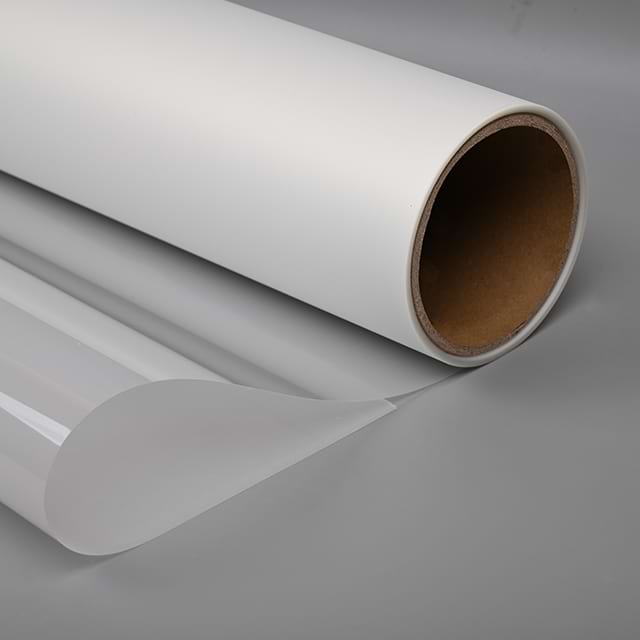
Selecting the correct peel type is a pivotal operational decision for any print shop. The choice between hot and cold peel impacts daily production workflows, labor allocation, and the final tactile finish of the apparel.
Cold peel variants represent the traditional standard in the industry. After the heat press cycle concludes, the operator must remove the garment from the press and allow it to cool completely to room temperature before peeling away the carrier.
These films are highly forgiving and offer an extremely stable release. They are the ideal choice for designs featuring ultra-fine details, tiny text, or complex transparent halftones. The cooling period allows the melted adhesive to cure completely into the fabric fibers. This results in a smooth, matte finish that boasts exceptional wash durability. However, the primary drawback is production speed. Waiting for garments to cool introduces a significant bottleneck in high-volume manufacturing environments, requiring dedicated physical space for cooling racks.
In contrast, hot peel options are engineered with a highly reactive chemical release agent. This coating activates and detaches while the adhesive is still in a semi-molten state. The carrier is ripped away immediately after the heat press opens.
Imagine a busy Tuesday morning in your print shop. A rush order of 500 shirts comes in. The instant peeling mechanism of hot peel materials saves massive amounts of labor time. It entirely eliminates the cooling bottleneck, making it the preferred choice for commercial facilities. Additionally, these films often leave a slightly softer hand-feel on the garment. The trade-off is that hot peeling requires precise environmental control. If the temperature of the heat press is inconsistent, the semi-molten ink can lift from the fabric, ruining the blank.
Recent advancements in coating chemistry have introduced warm peel alternatives. These offer a strategic middle ground. Operators can remove the backing after a brief cooling period, typically 5 to 10 seconds. This provides a functional balance, offering the detail retention of a cold peel combined with a production speed much closer to that of a hot peel workflow.
When purchasing continuous rolls or cut sheets, operators face another technical choice. You must decide between single-sided and double-sided coatings. While the actual printing process only occurs on one face, the treatment of the non-printable side plays a vital role in hardware compatibility.
On single-sided variants, only the active printing face receives the micro-porous matte treatment. The back remains smooth and glossy. These are generally more cost-effective. They are perfectly suited for smaller desktop printer setups or budget-conscious hobbyists using A3 cut sheets. However, in commercial roll-to-roll printers, the smooth back lacks necessary friction. This deficit can cause industrial feed rollers to slip, leading to severe banding in the print or catastrophic alignment issues.
Double-sided materials feature a matte finish on both sides. Only one side is chemically formulated to accept pigment, but the secondary coating on the back provides essential mechanical friction. This ensures that heavy-duty pinch rollers grip the material securely. It allows high-speed commercial machines to feed the continuous roll smoothly without slippage.
Furthermore, the dual coating significantly reduces static electricity buildup as the roll unwinds. Static is a major enemy in this production method. It acts like a magnet, attracting stray adhesive powder to unprinted areas. Double-sided treatments mitigate this risk, ensuring cleaner output and less daily machine maintenance.
Many machine operators are quick to blame their printheads or software profiles for poor results. Yet, the root cause is frequently substandard base material. Understanding how the substrate interacts with other variables can resolve the most frustrating production headaches.
When the white underbase mixes with the CMYK layer, colors appear muted. Sharp geometric edges look fuzzy. This visual failure indicates a breakdown of the absorption layer. High-quality substrates feature a thicker, more robust micro-porous coating that rapidly absorbs the liquid carrier in the ink. By locking the pigments in place instantly, it prevents them from migrating before they hit the curing oven.
After shaking off the TPU powder, operators may occasionally notice a fine dusting clinging to areas where no design was printed. Once cured and pressed, this creates a speckled halo around the graphic. This phenomenon is caused by static electricity and uneven coating application. Premium variants are manufactured with active anti-static properties built directly into the chemistry. High-end manufacturing processes also ensure the coating is applied evenly, eliminating microscopic sticky patches that trap stray powder.
As the printed graphic passes through the high-temperature curing oven, the edges may curl upward. Sometimes they strike the heating elements. This causes a severe fire hazard and smears the wet ink. Curling is an immediate symptom of thermal instability. It is almost exclusively found in cheap plastics thinner than 75 microns. Upgrading to a thicker, industrial-grade base provides the structural rigidity required to resist warping, maintaining a perfectly flat profile throughout the curing cycle.
Selecting the appropriate consumable requires objectively analyzing your specific production environment, hardware capabilities, and end-product goals. Making data-driven choices here will drastically reduce defect rates and improve your overall profit margins.
First, assess your hardware architecture. If you operate a converted desktop printer using cut sheets, a single-sided cold peel option is usually sufficient and highly cost-effective. Conversely, if you are running dual-head or four-head commercial roll-to-roll machines, investing in double-sided, hot peel material is mandatory. This maintains feed accuracy and keeps up with high-speed output.
Next, evaluate the visual characteristics of the coating itself. Depending on the manufacturer, finishes can range from fully transparent to a highly frosted matte. Transparent options allow for effortless visual alignment when pressing multiple graphics onto a single garment. Frosted finishes typically possess a thicker, more porous chemical layer. This structure is engineered to hold heavy white ink loads without pooling, making it superior for high-resolution photography and heavy ink saturation.
Finally, prioritize supply chain reliability. In the garment decoration industry, batch-to-batch consistency is paramount. A slight variance in the chemical release agent from one order to the next can force a shop to completely recalibrate their curing temperatures and heat press times. This results in lost labor. Sourcing industrial-grade DTF PET Film from established providers ensures that micron thickness, anti-static properties, and absorbency remain uniform across every single roll. Reliable suppliers provide comprehensive technical data, allowing operators to make informed decisions based on empirical metrics rather than frustrating trial and error.
Procuring premium materials is only the first phase of quality control. The chemical treatments applied to these polymers are highly reactive to environmental variables. Implementing strict protocols for storage and handling is absolutely necessary to maximize the efficacy of your consumables and maintain a stable daily workflow.
The absorption layer is inherently hygroscopic. It actively pulls moisture out of the surrounding air. If the material becomes damp, the liquid pigment will spread prematurely. The adhesive powder will clump, leading to uneven curing.
To preserve the integrity of the coating, inventory must be stored in a strictly climate-controlled environment. The optimal ambient conditions require a relative humidity maintained between 40 percent and 60 percent. Ambient room temperature should range from 65°F to 75°F. If your facility is located in a humid geographic region, running a commercial dehumidifier is a mandatory operational expense. Always keep unused rolls sealed in their original moisture-barrier packaging.
The printable surface is highly sensitive to biological oils and mechanical abrasion. Human skin naturally secretes oils and sweat. These act as an invisible barrier between the coating and the printer ink. If an operator touches the printable side with bare hands, the ink will bead up and fail to adhere in those specific spots, resulting in a rejected garment.
Operators should wear lint-free cotton or nitrile gloves whenever loading rolls, cutting sheets, or transferring cured designs to the pressing station. Furthermore, maintaining a dust-free printing room prevents airborne particulates from settling onto the surface and creating microscopic voids in the final graphic.
While exact machine settings vary based on ink formulation and fabric composition, adhering to baseline scientific parameters ensures a significantly higher success rate. Standard 75-micron films typically follow the parameters below.
Process Stage | Temperature Range | Time Duration | Key Indicator of Success |
|---|---|---|---|
Powder Curing | 230°F to 320°F | 2 to 3 Minutes | Powder melts into a uniform, glossy gel. |
First Heat Press | 300°F to 320°F | 10 to 15 Seconds | Firm bonding; fabric texture is faintly visible through the print. |
Post-Press Finishing | 300°F | 5 to 10 Seconds | Seals edges, increases wash-fastness, and softens the hand-feel. |
While high-end printers and vibrant inks often get the spotlight, the foundational carrier medium is the true backbone of excellent digital printing. A high-quality substrate acts as the ultimate insurance policy for your production line. It stops colors from bleeding, prevents frustrating powder clumping, and ensures a seamless release onto the final garment.
Never cut corners on your base materials. Attempting to save pennies on inferior plastics will inevitably cost you dollars in wasted apparel and lost labor time. Premium materials ensure your designs stay vibrant, stretchable, and highly durable wash after wash. If you are ready to standardize your output and eliminate daily printing headaches, explore the rigorously tested PET DTF Film options available at Filmstarlight to protect your brand reputation and elevate your production quality to the next level.
No. Regular PET plastic or standard office transparency sheets completely lack the specialized chemical coating required for this specific manufacturing process. The proprietary coating on dedicated materials is engineered to absorb water-based pigment inks and hold them in place without spreading. If you attempt to print on untreated plastic, the liquid will immediately bead up, pool together, and run off the edges. Furthermore, standard plastics cannot withstand the extreme temperatures of curing ovens, leading to severe melting and potential damage to your expensive hardware.
The fundamental chemistry and physical application of these two methods are entirely different. Sublimation paper is designed to hold specialized dye that turns into a gas when heated. This gas permanently bonds with synthetic polymer fibers such as polyester. It leaves absolutely no physical layer on the shirt. In contrast, the direct-to-film process utilizes a temporary carrier for liquid pigment ink and a physical TPU adhesive powder. During pressing, the adhesive melts and mechanically bonds the ink layer on top of the fabric. This mechanical bond allows the process to work on almost any fabric type, including heavy cotton, dark garments, and complex blends.
Identifying the correct printing face is crucial for a successful transfer. The printable side features the chemical absorption coating. This typically gives it a matte, slightly frosted, and textured appearance. If you gently run a fingernail across it, you will feel a slight chalky resistance. The non-printable side is generally smoother and shinier. For double-sided matte variants where both sides look visually similar, manufacturers often cut a small physical notch in the corner of the sheet or provide printed edge markers on the roll to indicate the correct orientation for the printhead.
For standard commercial operations, a 75-micron thickness is the industry baseline. It offers the perfect balance of heat resistance and flexibility, preventing warping in the curing oven while remaining easy to peel. For extremely heavy ink loads or high-temperature industrial setups, upgrading to a 100-micron thick film provides maximum dimensional stability and prevents edge curling entirely.
Premature peeling is rarely a film issue. It is almost always a curing or pressing failure. If the adhesive powder is under-cured in the oven, it will not form a proper gel. If the heat press temperature is too low, or the pressure is inadequate, the adhesive cannot mechanically grip the fabric fibers. Always verify your heat press temperature with an external laser thermometer and ensure you are performing a secondary post-press to seal the edges.
Yes, the chemical coating has a finite shelf life. Over time, the active treatment can degrade, oxidize, or become overly saturated with ambient moisture. This severely compromises its ability to hold liquid and release smoothly during pressing. Most commercially available, high-quality materials possess a shelf life of 12 to 24 months, provided they are stored in optimal climate-controlled conditions. Using expired inventory often results in patchy graphics, poor color density, and catastrophic adhesive failure on the heat press.
Melting or severe warping in the curing oven is typically the result of two factors: excessive heat calibration or substandard material thickness. Polyethylene Terephthalate has a naturally high melting point, but ultra-thin sheets lack the structural integrity to withstand prolonged exposure to temperatures exceeding 300°F. If your substrate is warping, first verify your oven internal temperature with an independent laser thermometer. If the temperature is correct, you must upgrade to a thicker commercial-grade roll designed to endure industrial curing environments.
No. The process is strictly a single-use application. The specialized chemical release coating is permanently altered and spent during the heat pressing phase. Once the thermal shock activates the release agent and transfers the graphic to the garment, the plastic is left bare and chemically inert. Attempting to run a used sheet back through a printer will result in the ink failing to absorb, leading to immediate smearing and severe potential damage to your printhead.
Polyethylene Terephthalate itself is a highly recyclable thermoplastic, universally identified by Recycling Code 1 commonly used for disposable water bottles. However, the recycling process for printed substrates is complicated by the presence of residual chemical coatings and microscopic ink remnants left behind after pressing. Because it is considered a mixed-material waste product at the end of its lifecycle, standard municipal recycling programs often reject it. Print shop operators must consult with their local specialized industrial recycling facilities to determine if they possess the capability to process coated polymer materials safely.


